leave a message
If you are interested in our products and want to know more details,please leave a message here,we will reply you as soon as we can.
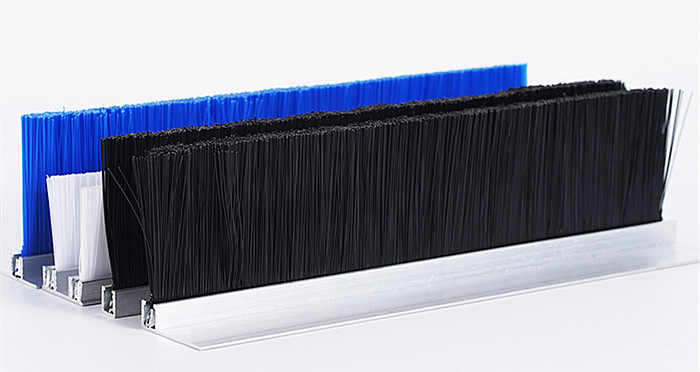
Strip Brush is one of the most widely used types of industrial brushes. It is commonly applied in sealing, cleaning, polishing, dust control, and many other industrial processes. Among all strip brush materials, nylon strip brush and polypropylene strip brush are the two most popular options.
Because they look almost identical in appearance, many buyers find it difficult to distinguish between them. However, their performance, durability, and ideal applications are quite different.
In this article, we will clearly explain the differences between nylon and polypropylene strip brushes, their best use cases, and practical identification methods. This will help you choose the right material for your application and improve efficiency.
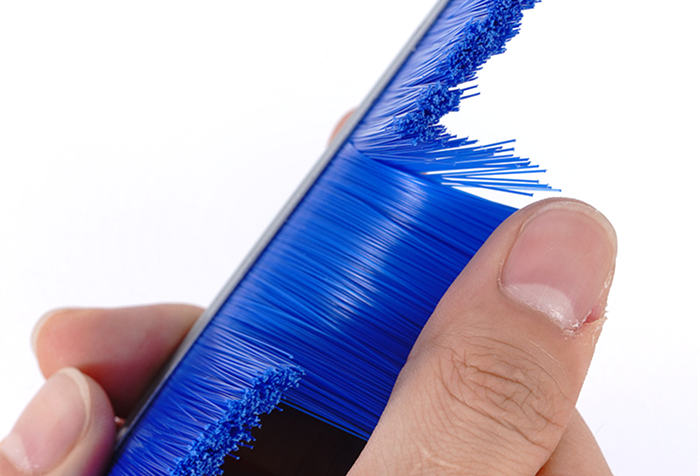
Key Differences Between Nylon and Polypropylene Strip Brushes
1, Abrasion Resistance
Nylon strip brushes offer significantly better wear resistance than polypropylene.
Polypropylene strip brushes, on the other hand:
If your application involves continuous movement or friction, nylon is the better choice.
2, Water Absorption
Water absorption directly affects dimensional stability and performance in humid environments.
Nylon strip brush: absorbs about 3.5%–5% water
Polypropylene strip brush: absorbs less than 0.05% water
For wet or humid environments, polypropylene performs better.
3, Temperature Resistance
Temperature tolerance is another critical factor.
Nylon strip brush:
Polypropylene strip brush:
Nylon is the preferred choice for high-temperature environments.
4, Chemical Resistance
Chemical stability varies significantly between the two materials.
Nylon strip brush:
Polypropylene strip brush:
Polypropylene is ideal for chemically aggressive environments.
5, Cost
Cost is often a deciding factor in large-scale applications.
Nylon strip brush:
Polypropylene strip brush:
For budget-sensitive projects, polypropylene is often preferred.
Suitable Applications
Based on the differences above, each material has its ideal use cases.
Nylon Strip Brush Applications
Due to its high abrasion resistance and temperature resistance, nylon strip brushes are ideal for:
Polypropylene Strip Brush Applications
With its low water absorption, strong chemical resistance, and lower cost, polypropylene strip brushes are suitable for:
How to Identify Nylon vs Polypropylene Strip Brushes
Since they look very similar, here are two practical ways to distinguish them.
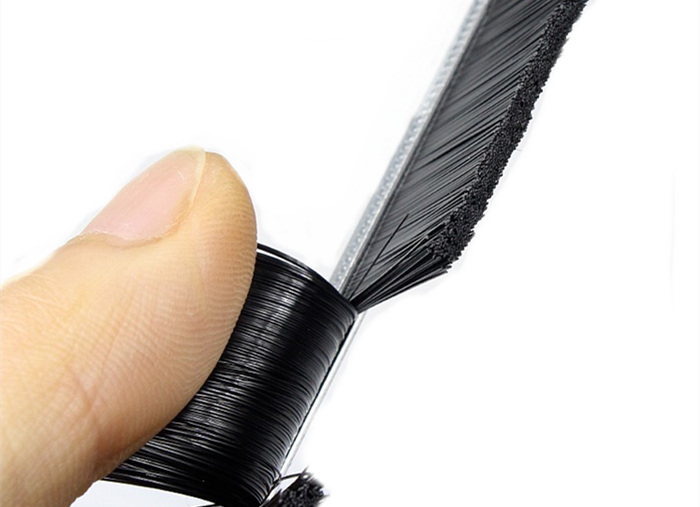
1, Touch and Bending Test
By touch:
By bending:
Nylon:
Polypropylene:
2, Burning Test (Professional Method)
This method should only be performed safely in controlled conditions.
Nylon bristles:
Polypropylene bristles:
Need Expert Advice?
At BaJie Brush, we specialize in manufacturing high-quality strip brushes with customized materials, sizes, and configurations.
If you have any questions about nylon strip brush or polypropylene strip brush, feel free to contact us. Our team will provide professional recommendations tailored to your application.



 IPv6 network supported.
leave a message
Scan to Wechat :

Scan to WhatsApp :