Enter product details (such as sizes, materials etc.) and other specific requirements to receive an accurate quote.
leave a message
If you are interested in our products and want to know more details,please leave a message here,we will reply you as soon as we can.
Submit
Home

Blog

Blog

  • How to Source Industrial Brushes From A Chinese Manufacturer
    How to Source Industrial Brushes From A Chinese Manufacturer
    Apr 10, 2026
    China, as one of the world’s largest manufacturing countries, has gained significant market share thanks to its combination of competitive pricing and reliable quality. Many companies in developed countries choose to source products from China to reduce costs, and the industrial brush industry is no exception. Today, China’s industrial brush industry is highly mature. From raw material sourcing to production, packaging, and global shipping, the entire supply chain is well-established. However, how to source industrial brushes from a Chinese manufacturer remains a common challenge for many buyers. How to Find Chinese Industrial Brush Manufacturers There are three main ways to find reliable suppliers in China: 1, Trade Shows The most traditional method is attending trade shows. Every year, there are many exhibitions around the world related to industrial brushes, and Chinese manufacturers are usually well represented. The main advantage of this approach is the ability to meet suppliers face-to-face. This direct communication significantly reduces the risk of fraud, and you can place orders with greater confidence. However, trade shows also have clear disadvantages. Attending them requires travel expenses such as flights and hotels, which can be costly. In addition, it is often difficult to determine whether an exhibitor is a trading company or a real manufacturer. 2, Search Engines Another common way is using search engines such as Google or Bing. By searching keywords like “Chinese industrial brush manufacturer,” you can find many suppliers online. This method is low-cost and efficient. Through company websites, you can get a comprehensive understanding of their products and capabilities. The downside is that it can be difficult to verify the authenticity of suppliers, and after-sales service is not always guaranteed. 3, B2B Platforms Large B2B platforms such as Alibaba and Made-in-China are also popular sourcing channels. These platforms host a large number of Chinese suppliers, including many industrial brush manufacturers. The advantage of this method is the wide selection and certain level of platform protection, especially regarding payments and disputes. However, these platforms usually charge commissions of around 2%–3%. In addition, price competition is intense, and orders often go to the lowest bidder, which may lead to lower product quality. Practical Sourcing Advice Each of the above methods has its own advantages and disadvantages. We recommend cross-checking suppliers through multiple channels. If possible, visiting the factory in person is the most reliable way to ensure you are working with a genuine manufacturer. In China, there are two major regions known for industrial brush production: Jiangsu and Zhejiang (Eastern Coastal Region)This area has a long history in brush manufacturing and uses advanced production equipment. Products from this region are generally of higher quality. In addition, the proximity to major ports helps reduce shipping costs. Anhui ProvinceThis region has a high concentration of brush factories and a well-developed supply chain, which makes prices more competitive. However, the overall quality level is relatively lower compared to coastal regions. Why Choose Bajie Brush More and more buyers choose Bajie Brush when sourcing industrial brushes from China. Our key advantages include: Direct ManufacturerWe are a source factory located in Huzhou, Zhejiang Province. Customers are always welcome to visit our factory. Strategic LocationLocated in the Jiangsu–Zhejiang region, we are close to major ports, helping reduce shipping costs. Quality-First PhilosophyCompared to many other manufacturers in China, we consistently prioritize product quality in every stage of production. Wide Product RangeWe offer a full range of industrial brushes, including strip brushes, roller brushes, lath brushes, disc brushes, and more. Conclusion In summary, there are three main ways to find Chinese industrial brush manufacturers: trade shows, search engines, and B2B platforms. Each method has its pros and cons, so it is important to evaluate suppliers carefully. If your priority is cost, manufacturers in Anhui may be a suitable choice. If you focus on quality, manufacturers in the Jiangsu–Zhejiang coastal region are a better option—such as Bajie Brush.
    Read More
  • What Are the Differences Between Nylon and Polypropylene Strip Brushes?
    What Are the Differences Between Nylon and Polypropylene Strip Brushes?
    Apr 08, 2026
    Strip Brush is one of the most widely used types of industrial brushes. It is commonly applied in sealing, cleaning, polishing, dust control, and many other industrial processes. Among all strip brush materials, nylon strip brush and polypropylene strip brush are the two most popular options. Because they look almost identical in appearance, many buyers find it difficult to distinguish between them. However, their performance, durability, and ideal applications are quite different. In this article, we will clearly explain the differences between nylon and polypropylene strip brushes, their best use cases, and practical identification methods. This will help you choose the right material for your application and improve efficiency. Key Differences Between Nylon and Polypropylene Strip Brushes 1, Abrasion Resistance Nylon strip brushes offer significantly better wear resistance than polypropylene. Nylon has 1.5 to 4 times longer service life in most applications It maintains performance under repeated friction and high-frequency use Polypropylene strip brushes, on the other hand: Have lower abrasion resistance Wear out faster in heavy-duty environments If your application involves continuous movement or friction, nylon is the better choice. 2, Water Absorption Water absorption directly affects dimensional stability and performance in humid environments. Nylon strip brush: absorbs about 3.5%–5% water Slight expansion in wet conditions Increased flexibility but slightly reduced strength Polypropylene strip brush: absorbs less than 0.05% water Excellent dimensional stability Fast drying and resistant to mold For wet or humid environments, polypropylene performs better. 3, Temperature Resistance Temperature tolerance is another critical factor. Nylon strip brush: Can withstand 150°C to 220°C Maintains stable hardness under normal operating temperatures Polypropylene strip brush: Starts to soften above 60°C Performance decreases significantly under high temperature or strong chemical exposure Nylon is the preferred choice for high-temperature environments. 4, Chemical Resistance Chemical stability varies significantly between the two materials. Nylon strip brush: Resistant to weak acids and alkalis Not suitable for strong alkaline environments Polypropylene strip brush: Excellent resistance to most acids and alkalis Stable against most chemicals except strong oxidizing acids (e.g., concentrated sulfuric or nitric acid) Polypropylene is ideal for chemically aggressive environments. 5, Cost Cost is often a deciding factor in large-scale applications. Nylon strip brush: Higher material and production cost Polypropylene strip brush: More economical and cost-effective For budget-sensitive projects, polypropylene is often preferred. Suitable Applications Based on the differences above, each material has its ideal use cases. Nylon Strip Brush Applications Due to its high abrasion resistance and temperature resistance, nylon strip brushes are ideal for: High-frequency door sealing systems Continuous cleaning or polishing processes Conveyor systems with constant movement High-temperature environments (e.g., food processing industry) Polypropylene Strip Brush Applications With its low water absorption, strong chemical resistance, and lower cost, polypropylene strip brushes are suitable for: Wet or humid environments Chemical processing areas Low-frequency sealing applications General-purpose dust and debris control How to Identify Nylon vs Polypropylene Strip Brushes Since they look very similar, here are two practical ways to distinguish them. 1, Touch and Bending Test By touch: Nylon bristles feel slightly textured, similar to the back side of silk Polypropylene bristles feel smooth and slippery, like a plastic ruler By bending: Nylon: Bends easily and quickly returns to its original shape Leaves almost no crease Maintains elasticity after repeated bending Polypropylene: Leaves visible creases after bending May turn white at the bend point Becomes brittle and may break after repeated bending 2, Burning Test (Professional Method) This method should only be performed safely in controlled conditions. Nylon bristles: Shrink into small furball-like shapes when burning Produce a blue-white flame with slight crackling sounds Residue is hard, brittle black particles Polypropylene bristles: Burn with a yellow flame and black smoke Produce a strong plastic odor Residue is soft, sticky, and gray (similar to melted gum) Need Expert Advice? At BaJie Brush, we specialize in manufacturing high-quality strip brushes with customized materials, sizes, and configurations. If you have any questions about nylon strip brush or polypropylene strip brush, feel free to contact us. Our team will provide professional recommendations tailored to your application.
    Read More
  • What Is Industrial Roller Brush
    What Is Industrial Roller Brush
    Mar 09, 2026
    An Industrial Roller Brush is one of the most widely used tools in modern manufacturing and cleaning systems. It is a cylindrical industrial brush designed to rotate on a shaft and perform various surface treatment tasks. Because of its cylindrical structure, it is also commonly called a Cylindrical Brush. Industrial roller brushes are used in a wide range of industries and production lines. Typical applications include: Conveyor belt cleaning Vegetable and fruit washing Wood board polishing Solar panel cleaning Glass washing machines Metal surface treatment Because of this versatility, roller brushes have become essential components in automated production equipment. From a manufacturing perspective, industrial roller brushes are generally divided into two main types: Staple Set Roller Brush Spiral Wound Roller Brush Staple Set Roller Brush A Staple Set Roller Brush is made of two main parts: A tube core Tufted bristles inserted into the tube During manufacturing, the bristles are inserted into the tube in small bundles called tufts. The key component that secures the bristles inside the tube is the anchor wire. The anchor wire locks the bristle tufts firmly inside the tube to ensure that the brush does not shed during operation. Bristle Materials Different working environments require different filament materials. Common options include: Polypropylene Nylon PBT PE Steel wire Animal hair Tube Materials The tube core can be made from either plastic or metal. Plastic tubes commonly include: Nylon Polypropylene PVC ABS POM Plastic tubes are economical and easy to manufacture. Steel tubes may include: Aluminum Carbon steel Steel tubes offer higher precision and structural rigidity but usually have higher production costs. Anchor Wire Material The anchor wire is typically made of galvanized steel. However, if the working environment involves water, chemicals, or acidic and alkaline conditions, stainless steel anchor wire is strongly recommended. Stainless steel prevents corrosion, reduces bristle loss, and significantly extends the service life of the roller brush. How to Choose the Right Staple Set Roller Brush Selecting the correct roller brush mainly involves three key factors. 1, Bore Diameter and Brush Length The first step is determining the bore diameter (D1) and brush length (L) according to your machine or production line. Accurate dimensions ensure proper installation and smooth operation. 2, Selecting the Right Materials For bristle material, it depends on the application. For delicate surfaces such as glass, nylon filament brushes are recommended because they are soft and non-abrasive. For heavy cleaning or polishing tasks, steel wire brushes provide stronger scrubbing power. For special requirements such as anti-static applications, materials like horse hair may be used. If you are unsure which material is suitable for your application, consulting a professional brush manufacturer is recommended. For the tube material, plastic tubes are usually preferred because they are cost-effective. However, if the working environment has high temperatures, nylon tubes are recommended due to their better heat resistance. Steel tubes provide higher dimensional precision and are less likely to deform. However, they increase overall production cost. A practical solution for applications that require precise bore dimensions, such as in the woodworking industry, is to use a plastic tube with steel rings inserted at both ends. This design ensures accurate bore sizing while keeping costs relatively low. 3, Bristle Length and Density The length and density of bristles directly affect brush performance. Longer bristles usually provide longer service life but lower cleaning force. Higher bristle density increases cleaning power. Bristle density can be adjusted by modifying two parameters: A – Hole diameter B – Hole spacing By controlling these factors, manufacturers can design a roller brush optimized for specific industrial applications. Spiral Wound Roller Brush Another common type is the Spiral Wound Roller Brush. This type of brush is constructed using: A formed strip brush A steel pipe core During manufacturing, the strip brush is bent and wound around the steel pipe in a spiral pattern. The strip is wrapped in coils along the tube, and both ends are secured by welding. Bristle Materials The filament materials are similar to those used in staple set roller brushes, including: Polypropylene Nylon PBT PE Steel wire Animal hair Strip Brush Channel Types The metal channel that holds the bristles can be manufactured in three structures: Single Band (A) – standard strength Double Band (B) – medium strength Forced Band (C) – highest strength How to Choose a Spiral Wound Roller Brush The selection process is similar to choosing a staple set roller brush. However, spiral wound brushes have some distinct characteristics. Advantages: Higher bristle density Stronger brushing performance Disadvantages: Higher manufacturing cost Greater overall weight Bristle density can be adjusted by changing the coil spacing (X). When X = 0, the coils are tightly packed, creating the maximum bristle density. Typical Applications Spiral wound roller brushes are commonly used in the steel industry, especially in rolling mills for cleaning, polishing, or descaling steel sheets. Installation and Dynamic Balancing Whether you choose a staple set roller brush or a spiral wound roller brush, the brush must be installed on a steel shaft. For high-precision industries, manufacturers can also provide dynamic balancing services. After dynamic balancing, the vibration generated during rotation is significantly reduced. This provides two major benefits: More uniform surface treatment results Longer service life for both the roller brush and the machine Need Help Choosing the Right Industrial Roller Brush? Industrial roller brushes can be customized in many ways, including size, bristle material, density, and core structure. Choosing the right configuration ensures optimal performance and longer service life. If you have any questions about industrial roller brushes, feel free to contact BaJie Brush. Our team will help you select the most suitable solution for your equipment and production line.  
    Read More
  • How To Choose Brush For Rolling Mills
    How To Choose Brush For Rolling Mills
    Jan 13, 2026
    In rolling mills, brush is necessary for metal surface treatment, such as cleaning, washing, polishing and deburring. 3 main factors that affect rolling mills brush selection for rolling mills are filament material, brush construction and working condition. 1. Filament Material Nylon FilamentHard nylon is for strong cleaning. On the contrary, soft nylon is needed during fine cleaning. Advantage for nylon filament is acid-resistant and heat-resistant Abrasive FilamentAbrasive filament is nylon(PA6, PA612) mixed with abrasive materials. Diameter is from 0.46 to 1.78mm, and grit sizes are from 60# to 1000#. Grit size is higher, polishing performance is finer. Brush Construction Brush Outer DiameterA larger outer diameter allows the roller brush to handle heavier workloads. The diameter can be customized according to machine size and rotating speed. Filament Working LengthThis parameter  depend on brush life time and machine size Adding FilamentThere are two common filament arrangements: cassette type and spiral type. Accordingly, brushes are classified as cassette roller brushes and spiral roller brushes. In some applications, twisted in wire brushes structures are also used for stronger surface treatment and durability. Working Condition Rotating Speed(rpm)When setting rotating speed, it is necessary to give a full play to cleaning performance and polishing performance Pressure(A) Spray On BrushWhen brush is contacted with metal surface, the temperature is keeping rising. Spray bring temperature reduction. Spray in right direction remove dirt and increase cleaning performance. No spray will largely reduce service life of brush for rolling mills   If you would like to learn more, please visit our website:www.bajiebrush.com
    Read More
  • Double Band Strip Brush VS Single Band Strip Brush
    Double Band Strip Brush VS Single Band Strip Brush
    Dec 17, 2025
    When choosing the right strip brush, one of the most common questions is the difference between a Single Band Strip Brush and a double band strip brush. Although they may look similar at first glance, their structure, strength, and applications are quite different. Understanding these differences will help you select the right brush for sealing, cleaning, or heavy-duty industrial use.   What Is a Single Band Strip Brush   A Single Band Strip Brush, also known as a metal channel strip brush, is made by inserting bristles into a U-shaped metal channel and locking them in place with a retaining wire. Common backing materials include galvanized steel and stainless steel, making this brush suitable for both indoor and outdoor applications. One major advantage of the Single Band Brush is its flexibility in shape. It can be manufactured as a straight strip brush or bent into different forms such as spiral shapes, zigzag patterns, or circular brushes. Because of this flexibility, single band brushes are widely used for door and window sealing, conveyor sealing, and light-to-medium cleaning tasks. In many cases, a Single Band Strip Brush is coiled into a spiral to form a Single Band Spiral Roller Brush, which is commonly used for rope cleaning, solar panel cleaning, and road sweeping. For applications where moderate speed and flexibility are required, the single band design is often the most economical and practical choice. What Is a Double Band Strip Brush   A double band strip brush is designed for heavier and more demanding applications. Unlike the single band design, this brush uses two interlocked metal bands—a toothed outer band and an inserted inner band—to firmly secure the bristles. This double-locking structure creates a much stronger and more stable brush body.   Because of its reinforced construction, the double band strip brush  is rarely used in straight form. Instead, it is most commonly wound onto a steel tube to form a double band spiral roller brush. These roller brushes are designed to run at high rotational speeds and are widely used for industrial cleaning, deburring, polishing, and surface finishing.   Thanks to its strength and resistance to centrifugal force, a double band strip brush  is the ideal solution when brushes must operate continuously under high speed and heavy load conditions. Key Differences Between Single Band and Double Band Strip Brushes The main difference lies in strength and application. A single band strip brush is more flexible, easier to shape, and better suited for sealing and light cleaning. A double band strip brush offers superior holding strength, making it perfect for high-speed roller brush applications. If your application requires a brush to rotate quickly, withstand strong forces, or handle aggressive cleaning, a double band spiral roller brush is the better choice. For sealing gaps, guiding materials, or moderate cleaning, a ingle band strip brush will usually meet your needs at a lower cost. Which One Should You Choose   Choose a Single Band Strip Brush if you need: Door or window sealing Conveyor sealing Flexible shapes and easy forming Cost-effective solutions Choose a Double Band Strip Brush if you need: High-speed rotation Heavy-duty cleaning or polishing Long service life under tough conditions Industrial roller brush applications If you need help selecting the right single band brush, double band brush, or double band spiral roller brush, feel free to ask us(bajie brush) for expert guidance.
    Read More
  • How to Properly Package Long Strip Brushes for Safe Transportation
    How to Properly Package Long Strip Brushes for Safe Transportation
    Nov 10, 2025
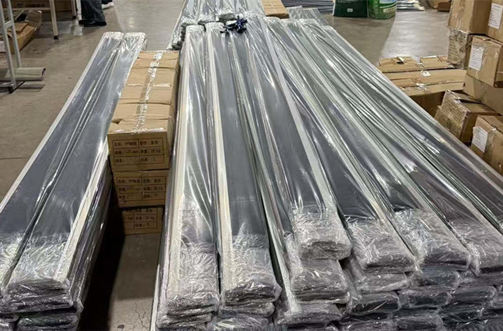
    Strip Brush is one of the best-selling types of Industrial Brushes. Most people are familiar with its basic structure — a metal back combined with bristles. However, if you look across the internet, you will find very few discussions about how to properly package this product, especially when it comes to long strip brushes. In this article, we will share the best packaging method for long strip brushes, ensuring your products arrive safely and without deformation.   1. Packaging for Standard Strip Brushes For standard lengths such as 900mm or 1 meter, packaging is relatively simple. We usually use cardboard boxes for protection. Below is a common packaging example for standard strip brushes:   2. Challenges in Packaging Long Strip Brushes When it comes to long strip brushes (2 meters, 3 meters, or even 6 meters long), things become much more complicated. Because of their length, even a slight deformation of the outer packaging can cause the metal backing to bend. Moreover, during transportation, vibrations and impacts may easily cause the soft bristles to fold or deform. Therefore, proper packaging for long strip brushes should focus on two key aspects: Increasing the strength of the outer box Ensuring the strip brushes remain fixed and stable inside the box   3. Step One: Reinforce the Outer Packaging The most effective solution is to use a reinforced wooden crate. Here’s how to build one: Use thick plywood to increase overall strength. Add bottom feet of at least 10 cm height to make it easy for forklifts to handle. Secure all joints with strong nails or screws, and wrap the entire crate with plastic or metal straps to prevent breakage during transportation.   You might wonder why not use reinforced cardboard boxes instead. The reason is simple — strip brushes are custom products. Each batch may vary in size, making it difficult to use standard-sized cartons. Moreover, heavy-duty cartons usually have a high minimum order quantity (MOQ), often in the hundreds, which is not practical. Wooden crates, on the other hand, have no MOQ and can be made to fit any dimension.   4. Step Two: Prevent Movement Inside the Box Now let’s look at how to keep the strip brushes stable inside the wooden crate. Even the strongest box cannot prevent damage if the brushes move around during sea or land transport. Here is the step-by-step method we use: Alternate the brush placement:Place the first strip brush with the bristles facing outward, the second with the metal back facing outward, and continue alternating. This pattern reduces empty space and balances the load.(Usually, 5–12 brushes per layer depending on brush size.) Put them into a Poly Bag:After arranging them, put the whole set into a polyethylene bag to protect against dust and moisture. Fix the positions with masking tape:Use masking tape at both ends and in the middle of the poly bag to minimize movement. Load into the wooden crate:Carefully place the packed brushes into the crate, ensuring no room for sliding. Following these steps will effectively prevent any internal movement or friction during long-distance shipping.   5. Benefits of This Packaging Method This packaging method not only ensures safety and product integrity but also offers practical advantages for buyers. Most long strip brush buyers are local wholesalers who later cut the brushes into standard lengths for their customers. Our packaging design makes it easy to store on shelves and convenient to handle when cutting or redistributing. If you would like to learn more about strip brush packaging or need custom packaging solutions for your products, feel free to contact Ba Jie Brush — your reliable industrial brush manufacturer and packaging expert.
    Read More
  • What Is Dry Ski Slope Material
    What Is Dry Ski Slope Material
    Oct 31, 2025
    Dry Ski Slope Material—also known as Dry Slope Skiing Material—is an innovative artificial surface to replicate the experience of snow skiing in regions where natural snow is unavailable. This Artificial Ski Slope Material allows ski enthusiasts to enjoy year-round skiing without depending on seasonal weather conditions. Each mat is constructed from curved brush strips made of UV-resistant PBT bristles and a stainless steel base. Typically, 16 curved brush strips form one mat measuring approximately 1.07 meters by 1.82 meters, securely fastened with stainless steel wires for stable installation and seamless slope integration. Key Features of Dry Ski Slope Material All-Season Skiing ExperienceEnjoy skiing even in warm or snowless areas with this advanced Dry Slope Material, perfectly simulating real snow performance. Durable and Weather-Resistant DesignPBT bristles are UV-stabilized, ensuring excellent performance under prolonged outdoor exposure. The stainless steel base strip adds structural integrity for long-term use. Smooth and Safe Gliding SurfaceThe dense, flexible bristles deliver optimal glide and control while minimizing friction. The absence of sharp edges enhances user safety for both beginners and professionals. Easy Installation and CustomizationThe mats can be easily connected or removed, allowing ski resorts or training centers to build custom slope sizes for different difficulty levels or event requirements. Why Choose Artificial Ski Slope Material Artificial Ski Slope Material has transformed the skiing industry by providing a practical solution where snow is limited or unpredictable. Whether for ski resorts, indoor training centers, or recreational facilities, this material offers a consistent, cost-effective, and eco-friendly skiing surface. With its exceptional durability, realistic glide performance, and low maintenance requirements, Dry Ski Slope Material is the preferred choice for global ski venues aiming to extend their operational seasons and attract more visitors.
    Read More
  • How to Choose Nylon Bristles for Industrial Brushes
    How to Choose Nylon Bristles for Industrial Brushes
    Oct 20, 2025
    When it comes to manufacturing industrial brushes, selecting the right bristle material is important for its performance. Nylon bristles are among the most popular materials used in the production of industrial brushes such as Nylon Strip Brushes, Nylon Roller Brushes, Nylon Tube Brushes, and Nylon Disc Brushes. In this blog, we will explore the four most common types of nylon bristles used in industrial brushes: PA6, PA66, PA610, and PA612. Understanding their unique properties will help you make an informed choice for your specific applications. 1, PA6 (Nylon 6) Bristles Melting Point: 220°C Density: 1.12–1.16 g/cm³ Water Absorption: 3.5% PA6 nylon bristles are widely used for their excellent fluidity and stability. They have a lower melting point compared to other nylons, making them suitable for applications that do not require high-temperature resistance. PA6 is softer than PA66, and its stability is superior, though it absorbs more moisture, which can affect its performance in humid environments. Advantages: Good flowability Stable performance Cost-effective for lower-temperature applications Disadvantages: Lower temperature resistance compared to PA66 Higher moisture absorption 2, PA66 (Nylon 66) Bristles Melting Point: 265°C Density: 1.12–1.16 g/cm³ Water Absorption: 2.5% PA66 is one of the most commonly used nylon materials in industrial brushes due to its superior mechanical properties. It has a higher melting point, making it ideal for high-temperature applications. It also offers better wear resistance, tensile strength, and rigidity compared to PA6. Advantages: Excellent tensile strength and wear resistance Better rigidity and durability for heavy-duty applications Higher temperature resistance (265°C) Disadvantages: Slightly higher moisture absorption than PA610 and PA612 Less flexible than PA6 3, PA610 (Nylon 610) Bristles Melting Point: 225°C Density: 1.06–1.08 g/cm³ Water Absorption: 1.5% PA610 has a lower density than both PA6 and PA66, offering a softer feel. It is known for its good chemical resistance, particularly in strong alkali environments, and is more resistant to weak acids compared to PA6 and PA66. Its ability to retain shape and durability makes it suitable for brushes in demanding environments. Advantages: Better resistance to weak acids and strong alkalis Softer touch compared to PA66 Lower moisture absorption than PA6 and PA66 Disadvantages: Lower tensile strength and rigidity than PA66 Moderate temperature resistance (225°C) 4, PA612 (Nylon 612) Bristles Melting Point: 220°C Density: 1.06 g/cm³ Water Absorption: 0.6% PA612 is one of the best choices for applications requiring exceptional flexibility, toughness, and wear resistance. It is ideal for environments with high chemical exposure and moisture, as it has a very low moisture absorption rate and can withstand strong alkalis and weak acids. However, it has slightly lower temperature resistance than PA6, PA66, and PA610. Advantages: Excellent flexibility and wear resistance Very low moisture absorption High toughness and resilience Better chemical resistance than PA6 and PA66 Disadvantages: Slightly lower temperature resistance (220°C) May not be suitable for extreme high-temperature environments Which Nylon Bristle Should You Choose? The choice of nylon bristle material largely depends on your specific application needs. Here are a few guidelines to help you decide: For high-temperature applications: PA66 offers the best heat resistance and durability. For soft touch and good chemical resistance: PA610 and PA612 are excellent choices for softer, more flexible brushes. For cost-effective and versatile use: PA6 is an affordable choice for general industrial applications that don’t require high-temperature or high-stress performance. At Ba Jie Brush, we offer a wide range of custom-made industrial brushes tailored to meet your specific needs. Contact us today to learn more about our high-quality nylon bristles and how they can enhance your industrial processes.
    Read More
  • What Materials Are Strip Brushes Made From
    What Materials Are Strip Brushes Made From
    Sep 26, 2025
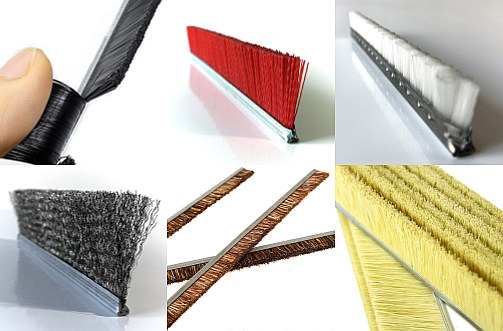
    Strip brushes are versatile industrial components widely used across multiple industries, including door and window sealing, conveyor belt cleaning, concrete block production, dust prevention, and machinery protection. The performance and lifespan of a strip brush largely depend on the strip brush material chosen. In this article, we will explore the most common options for both the backing and the bristles, helping you select the right material for your application.   Structure of a Strip Brush A standard strip brush is composed of two main parts: Metal Backingtypically formed into a U-shape, providing the structural base. Bristlessecurely clamped into the backing with a retaining rod, designed to perform sealing, cleaning, or polishing tasks. By combining different backing and bristle materials, manufacturers can create customized brushes that meet diverse industrial requirements. Metal Backing Materials Galvanized Steel Strip Brush A Galvanized steel strip brush is the most commonly used type because it meets the needs of general applications while remaining cost-effective. Galvanized steel is durable, corrosion-resistant under normal conditions, and ideal for sealing doors, windows, and conveyor systems. For example, galvanized steel backing is widely applied in door bottom sweep brushes, offering a reliable and affordable sealing solution.   Stainless Steel Strip Brush When higher performance is required, a stainless steel strip brush is the preferred choice. Stainless steel provides superior rust resistance, making it suitable for industries where hygiene and durability are critical. In the food and pharmaceutical sectors, stainless steel ensures cleanliness, while in chemical environments exposed to acids, alkalis, or moisture, stainless steel backing prevents premature corrosion and extends product lifespan. Bristle Materials The bristles of a strip brush can be made from a variety of materials, each designed for specific applications.   Nylon Strip Brush A Nylon strip brush is one of the most popular options, known for its excellent flexibility, durability, and wear resistance. Nylon performs well under repeated friction and is suitable for sealing, dust removal, and light cleaning tasks. It also has better resilience compared to polypropylene, making it ideal for long-term use.   Steel Wire Strip Brush For heavy-duty applications, a steel wire strip brush is the best option. Steel wire bristles provide aggressive cleaning, rust removal, and surface preparation. These brushes are often used in industrial cleaning equipment, welding applications, and environments where high-strength abrasion is required.   Horsehair Strip Brush A horsehair strip brush is softer compared to synthetic and metal bristles, offering excellent anti-static properties. This makes horsehair ideal for delicate applications such as electronics, laboratory equipment, and fine dust cleaning, where static discharge could cause damage.   Other Bristle Materials Polypropylene Affordable and lightweight, commonly used for general sealing and dust prevention. TampicoA natural fiber with good heat resistance, often used in woodworking for polishing and finishing applications.   Choosing the Right Strip Brush Material Selecting the proper strip brush material depends on your specific application needs: For cost-effective sealing: choose galvanized steel strip brushes with polypropylene bristles. For environments requiring corrosion resistance: choose stainless steel strip brushes with nylon or horsehair bristles. For heavy-duty cleaning: choose steel wire strip brushes. For delicate or anti-static tasks: choose horsehair strip brushes.
    Read More
  • How To Choose Sealing Brush For Your Data Center
    How To Choose Sealing Brush For Your Data Center
    Jul 16, 2025
    Seal brush is widely used in data center. The functions are temperature control and cable management. Ba Jie Brush offer solution for data center sealing. Brushes can be installed on entry door, cabinet and floor.  In data center, chips in computer will get high temperature. For safety purpose and keep dust out, sealing brush is necessary. These brushes let cables pass, but stop dirt and pest.  In a word, sealing brush is ideal solution for a safe and clean data center. Below I will introduce some main types of sealing brush for data center. PVC Back Strip Brush This brush is for sealing rack cabinet and installed on backside for cable entry. The backing material(profile) is rigid PVC.  Flexible Clip On Strip Brush This brush is made by flexible rubber back, which tufted with nylon bristle. It is easy for installation by clip it on metal sheet. 1U Brush Panel The profile material is steel(galvanized steel or aluminum). Inside the profile is a metal channel strip brush.  Brush Grommet It can be round shape or square shape for cable entry. The profile material is plastic which is light weight. With high density of bristle, the sealing performance is wonderfully. Above are all types of sealing brushes you can choose for your data center.
    Read More
  • What Is Industrial Brush
    What Is Industrial Brush
    Jul 16, 2025
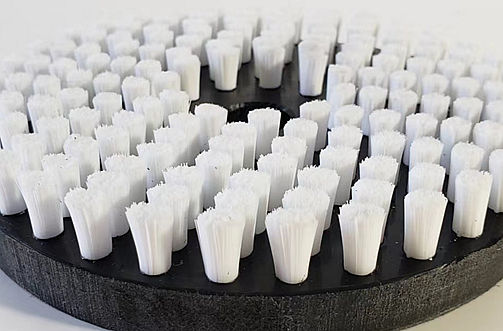
    Industrial brush is widely used for many applications and available in different shapes. It is hard to see them in daily life as normally they work in factories and plants for industrial purposes. Types Of Industrial Brush There are 4 main types for industrial brush. 1, Industrial Roller Brush This is a most commonly used one for industrial brush. It is in round shape, and consist of shaft, body and filament. Body are tufted with filament, then installed on shaft. The application is more than we can imagine. Below are some industries: Rolling Mills Fruit And Vegetable Processing Woodworking Cow Scratching Plate Processor Conveyor Cleaning Glass Washing Solar Panel Cleaning Pharmaceutical Industry 2, Industrial Strip Brush This brush is in strip form, and its main application is for industrial sealing for doors. The backing can be metal channel, flexible rubber or rigid plastic. Below are some of its applications: Door And Window Sealing Production Line Sealing Concrete Block Production Data Center Woodworking Conveyor Cleaning Metal Sheet Or Window Fabrication 3, Disc Brush This kind industrial brush is made by round plastic plate combined with filament on one side. Center of plastic plate is with a mounting hole. Tufted disc brush and moulded disc brush are all available. Below are some main applications: Road Sweeping Floor Scrubbing CNC Machine Aluminum Wheel Polishing Drill Bit 4, Twisted In Wire Brush This brush is 2 or 4 wires twisted with filament. The top can be cut, one tuft, plastic cap, bend. The end can be handle, threaded, loop, cut. Below are some main applications: Boiler Cleaning Tube Cleaning Pipe Cleaning Engine Polishing And Deburring Valve Guide Cleaning Medical Device Cleaning Above are 4 main types for industrial brushes. There are also many nonstandard brushes for industries purposes. Bristle Materials For Industrial Brush How to choose bristle materials is very important when producing industrial. It depends on materials of working surface. From light duty to heavy duty, the bristle materials are: Nylon Polypropylene PBT PE Horse Hair Pig Hair Goat Hair Tampico Abrasive Filament Steel Wire Stainless Steel Wire Brass Wire Brass Coated Wire Phosphorous Bronze
    Read More
  • What Is A Strip Brush
    What Is A Strip Brush
    Jul 16, 2025
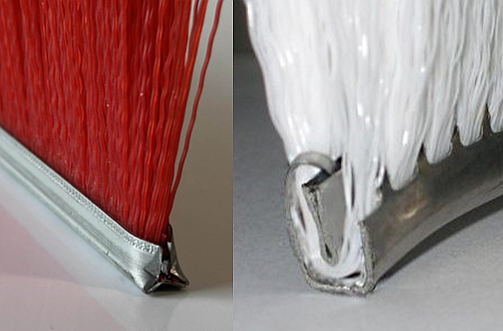
    A Strip Brush is a industrial tool featuring a straight, linear form. Comprised of bristles attached to strip body, these brushes come in various bristle materials, including synthetic fibers, natural fibers, animal hair, and steel wire. Depending on the base material, strip brushes can be classified into three primary types: Metal Channel Strip Brushes, Flexible Strip Brushes, and Lath Strip Brushes. Let’s dive into each type and their unique features: 1, Metal Channel Strip BrushThe Metal Channel Strip Brush is constructed using a metal channel back, typically made of galvanized steel or stainless steel. The bristles are securely held in place by an anchor wire that clamps them into the U-channel backing. This type of brush is primarily used in sealing applications and is often installed on aluminum profiles to provide a tight, reliable seal. Additionally, it can be shaped into a cylindrical spiral brush by winding it around a steel tube, making it ideal for specialized industrial tasks such as dust control, debris removal, and sealing. Key Benefits: High Strength: Thanks to its steel base. High Sealing Performance: Bristle density is high, which is good for sealing. Customizable: Available in different sizes, making it adaptable to specific applications. 2, Flexible Strip BrushThe Flexible Strip Brush is an upgraded version of the metal channel strip brush, designed with a TPE/TPV rubber base. This flexible backing provides superior resistance to high temperatures, allowing the brush to perform in demanding conditions. Due to its flexibility, this type of brush can easily conform to irregular shapes or arcs, making it ideal for complex sealing tasks. Flexible strip brushes are typically available in various base shapes, including: H/F Shape Clip-on Base Extruded Base Key Benefits: Flexibility: Can be installed on curved or irregular surfaces. High-Temperature Resistance: Ideal for industrial environments with varying temperatures. Various Applications 3, Lath Strip BrushThe Lath Strip Brush features a rigid plastic base made from materials such as PVC, PP (Polypropylene), Nylon, PE (Polyethylene), or even wood. The bristles are tufted directly onto the plastic base, which is designed to be either straight or at a specific angle. Lath strip brushes are ideal for a wide range of applications, including sealing, cleaning, washing, and dust removal. Key Benefits: Customizable Bristle Angles Durability Cost-Effective Strip brushes are commonly used industrial brushes used for a variety of applications, from sealing gaps to cleaning surfaces. By choosing the appropriate type, its function can ensure efficient, reliable performance in their operations. Whether you need high flexibility, robust durability, or precise sealing, strip brushes offer versatile solutions that are custom-tailored for various industrial needs.
    Read More

leave a message

leave a message
If you are interested in our products and want to know more details,please leave a message here,we will reply you as soon as we can.
submit
Contact Us : nero@anhuibrush.com

Home

Products

whatsApp

contact