Enter product details (such as sizes, materials etc.) and other specific requirements to receive an accurate quote.
leave a message
If you are interested in our products and want to know more details,please leave a message here,we will reply you as soon as we can.
Submit
Home

Nylon Strip Brush

Nylon Strip Brush

  • How to Choose Nylon Bristles for Industrial Brushes
    How to Choose Nylon Bristles for Industrial Brushes
    Oct 20, 2025
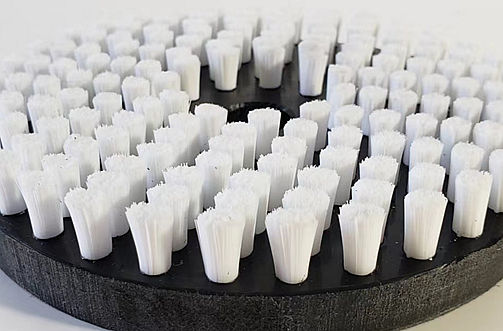
    When it comes to manufacturing industrial brushes, selecting the right bristle material is important for its performance. Nylon bristles are among the most popular materials used in the production of industrial brushes such as Nylon Strip Brushes, Nylon Roller Brushes, Nylon Tube Brushes, and Nylon Disc Brushes. In this blog, we will explore the four most common types of nylon bristles used in industrial brushes: PA6, PA66, PA610, and PA612. Understanding their unique properties will help you make an informed choice for your specific applications. 1, PA6 (Nylon 6) Bristles Melting Point: 220°C Density: 1.12–1.16 g/cm³ Water Absorption: 3.5% PA6 nylon bristles are widely used for their excellent fluidity and stability. They have a lower melting point compared to other nylons, making them suitable for applications that do not require high-temperature resistance. PA6 is softer than PA66, and its stability is superior, though it absorbs more moisture, which can affect its performance in humid environments. Advantages: Good flowability Stable performance Cost-effective for lower-temperature applications Disadvantages: Lower temperature resistance compared to PA66 Higher moisture absorption 2, PA66 (Nylon 66) Bristles Melting Point: 265°C Density: 1.12–1.16 g/cm³ Water Absorption: 2.5% PA66 is one of the most commonly used nylon materials in industrial brushes due to its superior mechanical properties. It has a higher melting point, making it ideal for high-temperature applications. It also offers better wear resistance, tensile strength, and rigidity compared to PA6. Advantages: Excellent tensile strength and wear resistance Better rigidity and durability for heavy-duty applications Higher temperature resistance (265°C) Disadvantages: Slightly higher moisture absorption than PA610 and PA612 Less flexible than PA6 3, PA610 (Nylon 610) Bristles Melting Point: 225°C Density: 1.06–1.08 g/cm³ Water Absorption: 1.5% PA610 has a lower density than both PA6 and PA66, offering a softer feel. It is known for its good chemical resistance, particularly in strong alkali environments, and is more resistant to weak acids compared to PA6 and PA66. Its ability to retain shape and durability makes it suitable for brushes in demanding environments. Advantages: Better resistance to weak acids and strong alkalis Softer touch compared to PA66 Lower moisture absorption than PA6 and PA66 Disadvantages: Lower tensile strength and rigidity than PA66 Moderate temperature resistance (225°C) 4, PA612 (Nylon 612) Bristles Melting Point: 220°C Density: 1.06 g/cm³ Water Absorption: 0.6% PA612 is one of the best choices for applications requiring exceptional flexibility, toughness, and wear resistance. It is ideal for environments with high chemical exposure and moisture, as it has a very low moisture absorption rate and can withstand strong alkalis and weak acids. However, it has slightly lower temperature resistance than PA6, PA66, and PA610. Advantages: Excellent flexibility and wear resistance Very low moisture absorption High toughness and resilience Better chemical resistance than PA6 and PA66 Disadvantages: Slightly lower temperature resistance (220°C) May not be suitable for extreme high-temperature environments Which Nylon Bristle Should You Choose? The choice of nylon bristle material largely depends on your specific application needs. Here are a few guidelines to help you decide: For high-temperature applications: PA66 offers the best heat resistance and durability. For soft touch and good chemical resistance: PA610 and PA612 are excellent choices for softer, more flexible brushes. For cost-effective and versatile use: PA6 is an affordable choice for general industrial applications that don’t require high-temperature or high-stress performance. At Ba Jie Brush, we offer a wide range of custom-made industrial brushes tailored to meet your specific needs. Contact us today to learn more about our high-quality nylon bristles and how they can enhance your industrial processes.
    Read More
  • What Materials Are Strip Brushes Made From
    What Materials Are Strip Brushes Made From
    Sep 26, 2025
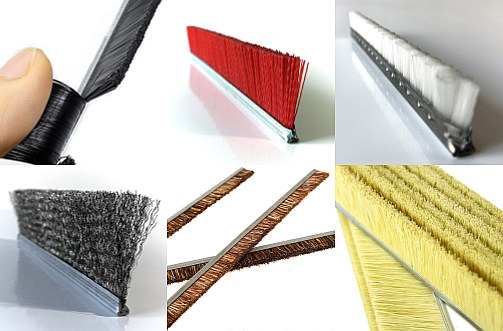
    Strip brushes are versatile industrial components widely used across multiple industries, including door and window sealing, conveyor belt cleaning, concrete block production, dust prevention, and machinery protection. The performance and lifespan of a strip brush largely depend on the strip brush material chosen. In this article, we will explore the most common options for both the backing and the bristles, helping you select the right material for your application.   Structure of a Strip Brush A standard strip brush is composed of two main parts: Metal Backingtypically formed into a U-shape, providing the structural base. Bristlessecurely clamped into the backing with a retaining rod, designed to perform sealing, cleaning, or polishing tasks. By combining different backing and bristle materials, manufacturers can create customized brushes that meet diverse industrial requirements. Metal Backing Materials Galvanized Steel Strip Brush A Galvanized steel strip brush is the most commonly used type because it meets the needs of general applications while remaining cost-effective. Galvanized steel is durable, corrosion-resistant under normal conditions, and ideal for sealing doors, windows, and conveyor systems. For example, galvanized steel backing is widely applied in door bottom sweep brushes, offering a reliable and affordable sealing solution.   Stainless Steel Strip Brush When higher performance is required, a stainless steel strip brush is the preferred choice. Stainless steel provides superior rust resistance, making it suitable for industries where hygiene and durability are critical. In the food and pharmaceutical sectors, stainless steel ensures cleanliness, while in chemical environments exposed to acids, alkalis, or moisture, stainless steel backing prevents premature corrosion and extends product lifespan. Bristle Materials The bristles of a strip brush can be made from a variety of materials, each designed for specific applications.   Nylon Strip Brush A Nylon strip brush is one of the most popular options, known for its excellent flexibility, durability, and wear resistance. Nylon performs well under repeated friction and is suitable for sealing, dust removal, and light cleaning tasks. It also has better resilience compared to polypropylene, making it ideal for long-term use.   Steel Wire Strip Brush For heavy-duty applications, a steel wire strip brush is the best option. Steel wire bristles provide aggressive cleaning, rust removal, and surface preparation. These brushes are often used in industrial cleaning equipment, welding applications, and environments where high-strength abrasion is required.   Horsehair Strip Brush A horsehair strip brush is softer compared to synthetic and metal bristles, offering excellent anti-static properties. This makes horsehair ideal for delicate applications such as electronics, laboratory equipment, and fine dust cleaning, where static discharge could cause damage.   Other Bristle Materials Polypropylene Affordable and lightweight, commonly used for general sealing and dust prevention. TampicoA natural fiber with good heat resistance, often used in woodworking for polishing and finishing applications.   Choosing the Right Strip Brush Material Selecting the proper strip brush material depends on your specific application needs: For cost-effective sealing: choose galvanized steel strip brushes with polypropylene bristles. For environments requiring corrosion resistance: choose stainless steel strip brushes with nylon or horsehair bristles. For heavy-duty cleaning: choose steel wire strip brushes. For delicate or anti-static tasks: choose horsehair strip brushes.
    Read More
leave a message

leave a message
If you are interested in our products and want to know more details,please leave a message here,we will reply you as soon as we can.
submit
Contact Us : nero@anhuibrush.com

Home

Products

whatsApp

contact